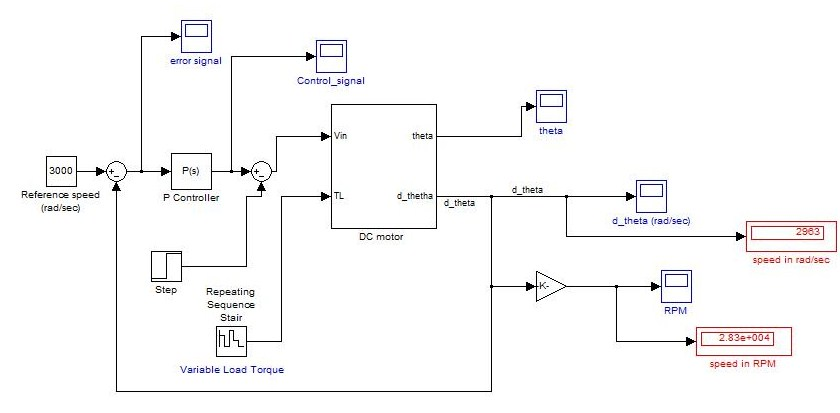
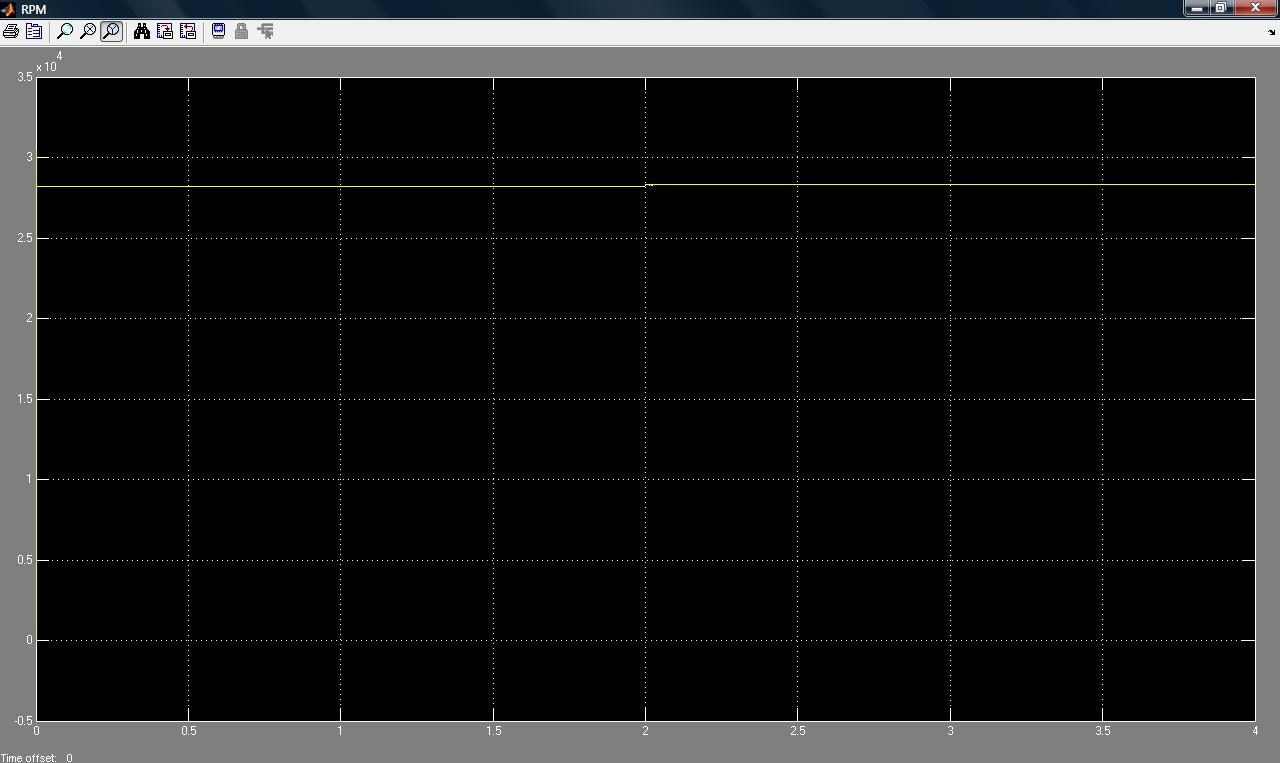
 Indian Institute of Technology - Kharagpur
PROPORTIONAL CONTROL
Proportional control is the simplest form of control applied to any control system. In the proportional control algorithm, the controller output is proportional to the error signal, which is the difference between the set point and the process variable. In other words, the output of a proportional controller is the multiplication product of the error signal and the proportional gain.
For example, it can be explained by how most drivers control the speed of a car. If the car is at target speed and the speed increases slightly, the power is reduced slightly, or in proportion to the error (the actual versus target speed), so that the car reduces speed gradually and reaches the target point with very little, if any, "overshoot", so the result is much smoother control than on-off control.
Proportional control can be mathematically expressed as:
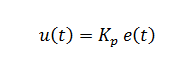
where
u(t) is the controller output signal.